
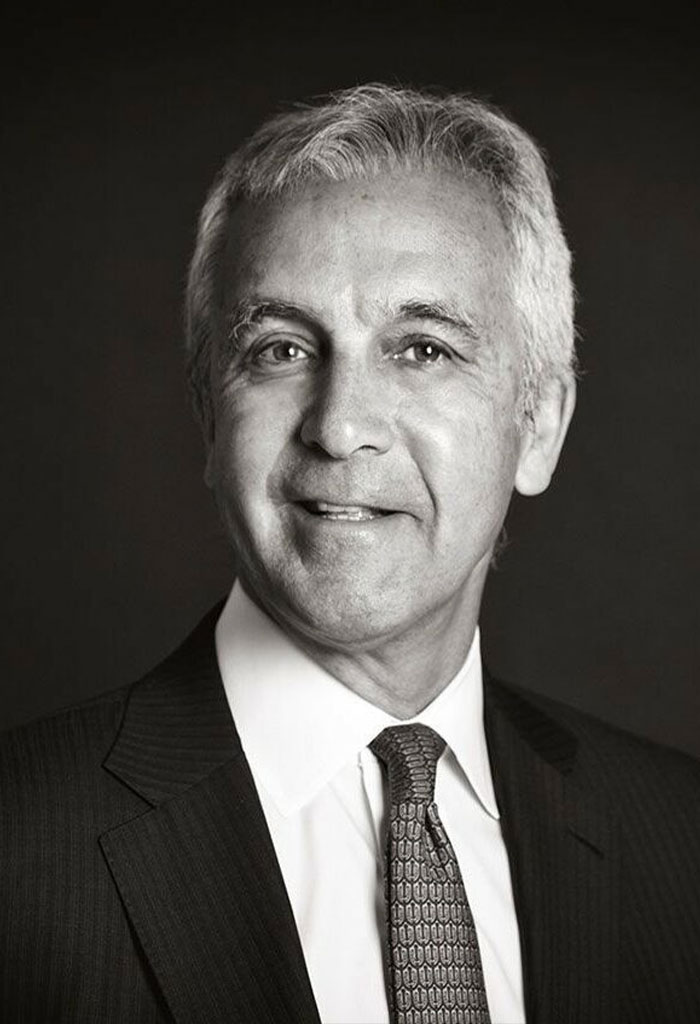
As part of our leadership spotlight series, we’re sitting down with leaders across Council Advisors—including our colleagues at SSA & Company, The Miles Group (TMG), and High Lantern Group—to share insights on leadership, execution, and what it takes to drive results in today’s business environment.
High Lantern Group sits at the intersection of business, policy, and society. In your work, what does that intersection look like in practice, and how do you help leaders navigate it effectively?
Our work focuses on how public policy and societal dynamics shape real business outcomes. Essentially, we help companies operate effectively in environments where regulation, government decision-making, and public trust directly affect their ability to grow and compete.
We work primarily in highly regulated sectors such as healthcare, pharmaceuticals, and financial services. The work often centers on public affairs, advocacy, and strategic communications, supporting companies as they engage policymakers, regulators, and other stakeholders around issues tied to their core business needs. That can include shaping policy positions, advancing thought leadership, and convening different sectors to address complex challenges.
A defining part of our approach is grounding that engagement in a clear framework of ideas. Rather than reacting to individual policy developments, we help organizations clarify what they are trying to achieve, why it matters, and how to engage credibly over time. The objective is sustained, informed participation in the public arena that aligns business strategy with broader societal realities.
You have argued that population aging is one of the defining transformations of this century. What are business leaders still underestimating about the opportunities in aging societies, and how do you persuade them to see aging as a growth strategy rather than just a cost?
Population aging is one of the defining megatrends of our time, and unlike many others, it is highly predictable. There are two main global drivers: people are living much longer, and birth rates have fallen sharply. Together, those dynamics are reshaping economies, labor markets, and demand in ways many businesses still underestimate.
From a market perspective, the opportunity is significant and growing. There are already roughly two billion people globally over the age of 55, and that population will double by mid-century. Some sectors, particularly healthcare, pharmaceuticals, and financial services, recognize this reality because older adults already make up much of their customer base. But in many other industries, such as travel, transportation, construction and consumer goods, aging is still viewed primarily as a cost or risk rather than a source of growth.
At the same time, public systems such as healthcare, pensions, and retirement models were designed for a very different demographic reality and are increasingly misaligned with how people live today. Much of our work focuses on helping companies address that misalignment through workforce strategies, business development, and policy advocacy, shifting the conversation from managing aging to competing and growing in an aging society.
Your career spans the U.S. Senate, Pfizer, global policy forums, and now your roles with High Lantern Group and the Global Coalition on Aging. What is the common thread that connects these chapters, and how does it shape the counsel you give today?
The common thread throughout my career has been the world of ideas. I began my career working for Senator Daniel Patrick Moynihan, who believed deeply in the role of ideas in shaping public policy. That experience set the foundation for how I approach this work.
That focus carried through to my time at Pfizer, where I was hired early to help create what was, in effect, an internal think tank. That effort eventually evolved into the company’s global public affairs function, grounding advocacy and communications in serious policy analysis rather than short-term tactics.
Across these roles, my work has been shaped by an interest in public policy and its relationship to democratic capitalism. That perspective continues to inform how I advise organizations today, particularly as they navigate complex policy environments and engage with governments and society in ways that are durable and credible.
You have built coalitions that bring together companies, NGOs, and policymakers around aging and health. Can you share an example of a coalition that truly shifted the conversation – and what it taught you about effective leadership?
The Global Coalition on Aging itself is a good example. It brings together companies from different sectors that share an interest in advancing policy and public understanding around health, work and retirement whether in the United States, Europe, the UK, or Japan. Working as a coalition allows companies to engage policymakers and society in ways that build credibility and trust and creating the consensus of which they are part.
Another example is the engAGE with Heart program in Baltimore, which rethinks healthcare delivery by working through trusted community institutions. By partnering with African American churches and age-friendly community centers, the program trains community health ambassadors who already have the trust of the people they serve, something traditional healthcare systems often struggle to establish on their own.
These efforts reinforce that effective leadership, particularly on complex social and health issues, depends on collaboration and trust. Coalitions work best when they bring diverse stakeholders together around shared goals and focus on creating value that resonates with policymakers and the communities affected by their decisions.
Looking ahead 5–10 years, what one or two leadership capabilities will matter most for CEOs and boards trying to thrive in an aging world, and what would you urge the next generation of leaders to start doing now?
At a foundational level, strong financial management and a real understanding of the people who make up an organization will always matter. Those are table stakes. What is becoming increasingly important, particularly for large and global companies, is the ability to engage thoughtfully and directly in the public arena.
Leaders can no longer treat public policy as something to outsource entirely to a government affairs team. Whether the issue is healthcare reform, retirement systems, labor markets, or capital formation, leaders themselves need a working understanding of the policy and societal forces shaping their businesses and the decisions they make.
I often think of a line attributed to Senator Everett Dirksen, who said that when you are being chased out of town by an angry mob, the key is to walk just far enough in front that you can claim to be leading them. For today’s leaders, that means staying ahead of the curve, ahead of conventional wisdom, but not so far ahead that people lose the thread.
As public engagement and policy considerations become more central to business success, leaders who build that awareness now will be far better positioned to guide their organizations through the demographic and economic changes ahead.
We use data collected by cookies to analyze traffic on this website. By clicking “Yes,” you agree to our use of cookies as described in our Privacy Policy.